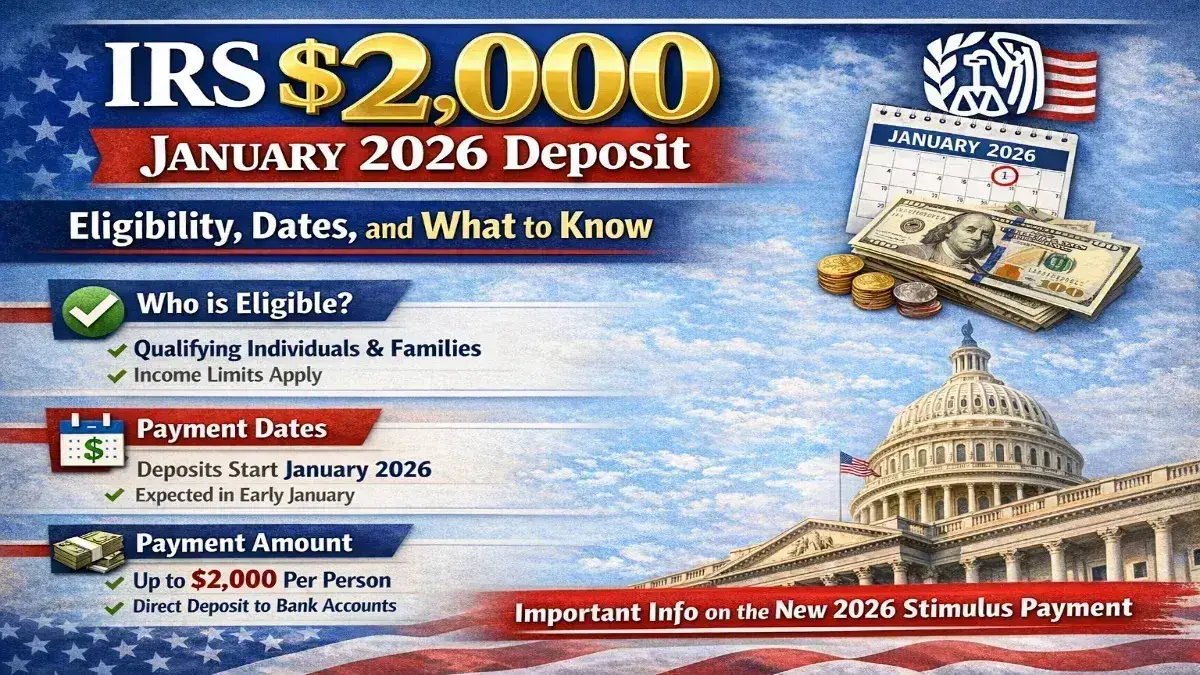
Internal Revenue Service $2,000 January 2026 Deposit: The topic of an IRS $2,000 deposit arriving in January 2026 has drawn strong attention from taxpayers across the United States. Many people are searching for clarity about whether this payment is real, who may receive it, and how it works. Online headlines and social media posts often make it sound like a new stimulus check, which adds to the confusion. In reality, the situation is more detailed and tied closely to the tax system.
Understanding what this deposit actually represents can help taxpayers avoid false expectations. This guide explains the facts in clear and simple language so readers know what to expect and how to prepare responsibly.
What the IRS $2,000 January 2026 Deposit Really Is
The IRS $2,000 January 2026 deposit is not a new nationwide stimulus payment being sent to everyone. Instead, it refers to IRS-related payments that may reach certain taxpayers based on their individual tax situations. These payments are usually connected to tax refunds, refundable tax credits, or corrections and adjustments from previous filings.

Some taxpayers may see amounts close to $2,000, but this figure is not guaranteed. The final deposit amount depends entirely on income, tax credits, dependents, and other filing details. Each case is reviewed individually by the IRS.
Why the $2,000 Figure Is Being Mentioned
The $2,000 number appears frequently because many refunds and credits can add up to this range. When refundable credits are applied or adjustments are made, the total refund may look similar to a stimulus payment. This has caused many people to assume a new program exists, even though it does not.
January is also the start of the tax refund cycle, which increases activity and speculation. As refunds begin processing, deposits showing up in bank accounts fuel online claims that a special payment has been released.

Who May Be Eligible for a January 2026 IRS Deposit
Eligibility for an IRS deposit in January 2026 depends on several tax-related factors. Taxpayers who filed accurate and complete returns on time are generally processed faster. Those who qualify for refundable credits linked to income levels, dependents, or past adjustments may receive larger refunds.
This payment is not automatic for everyone. Each taxpayer’s eligibility is determined individually based on IRS records and return calculations. Filing status, income, and credit eligibility all play an important role.
Expected Payment Timeline in January 2026
IRS payments are not released on a single day. Instead, deposits are sent throughout the month depending on when a return is accepted and processed. Taxpayers who file early and choose direct deposit usually receive funds sooner.

Delays may occur if the IRS needs to verify information or resolve discrepancies. Paper checks generally take longer than direct deposits. Patience is often required, especially during peak processing periods.
How the IRS Sends These Payments
Most IRS deposits are sent through direct deposit to the bank account listed on the most recent tax return. This method is faster and more secure. Taxpayers who did not select direct deposit will receive payments by mail, which can add extra time.
Keeping banking information and mailing addresses up to date is essential. Incorrect or outdated details can result in delayed or returned payments, extending the wait time significantly.

Common Misunderstandings About the $2,000 Deposit
One of the biggest misunderstandings is believing that everyone will receive exactly $2,000. In reality, the amount varies widely. Some taxpayers may receive less, some more, and many may not receive any payment at all.
Another misconception is that no action is required. In truth, accurate tax filing is critical. Errors, missing information, or unfiled returns can prevent payments from being issued on time.
How to Check Your IRS Payment Status Safely
The safest way to track an expected IRS deposit is through official IRS tools. These platforms allow taxpayers to view refund status and processing updates directly. Relying on unofficial sources or social media posts can lead to misinformation.

Taxpayers should avoid responding to messages claiming guaranteed payments or asking for personal information. The IRS does not contact individuals through unsolicited emails or texts regarding deposits.
What Taxpayers Should Do Now
To avoid delays, taxpayers should review their tax filings carefully and ensure all information is accurate. Responding quickly to any IRS notices can help keep processing on track. Those unsure about their eligibility should review their tax return details or seek professional advice.
Staying informed through official IRS updates is the best way to avoid confusion. Understanding how refunds and credits work can prevent unnecessary stress during tax season.
यह भी पढ़े:
 IRS Confirms $2,000 Direct Deposit for January, 2026 – New Payment Dates and Eligibility Guide
Final Takeaway on the IRS $2,000 January 2026 Deposit
The IRS $2,000 January 2026 deposit is best understood as a potential refund or credit-related payment, not a universal stimulus check. Eligibility, timing, and amounts vary based on individual tax circumstances. Many taxpayers may receive payments, but not everyone will qualify or receive the same amount.
Being prepared, filing taxes correctly, and relying on official information are the best ways to know what to expect. Clear understanding helps taxpayers plan better and avoid disappointment.
Disclaimer
This article is for informational purposes only and does not constitute financial, tax, or legal advice. As of now, no universal IRS $2,000 stimulus payment for January 2026 has been officially announced. Payment eligibility, amounts, and timelines depend on individual tax situations and may change. Readers should consult the official IRS website or a qualified tax professional for guidance specific to their circumstances.